
Vea también


 13.11.2026 11:17 AM
Don't fight the crowd. Retail investors bought the drop in NVIDIA shares caused by its leadership crisis, which closed the opening downside gap in the S&P 500. The potential removal of Jensen Huang as CEO of the largest chipmaker shook markets. But are you contracting with the bank or the banker? Business continues, and investors found opportunity in the turmoil.
NVIDIA's reaction to CEO resignation reports
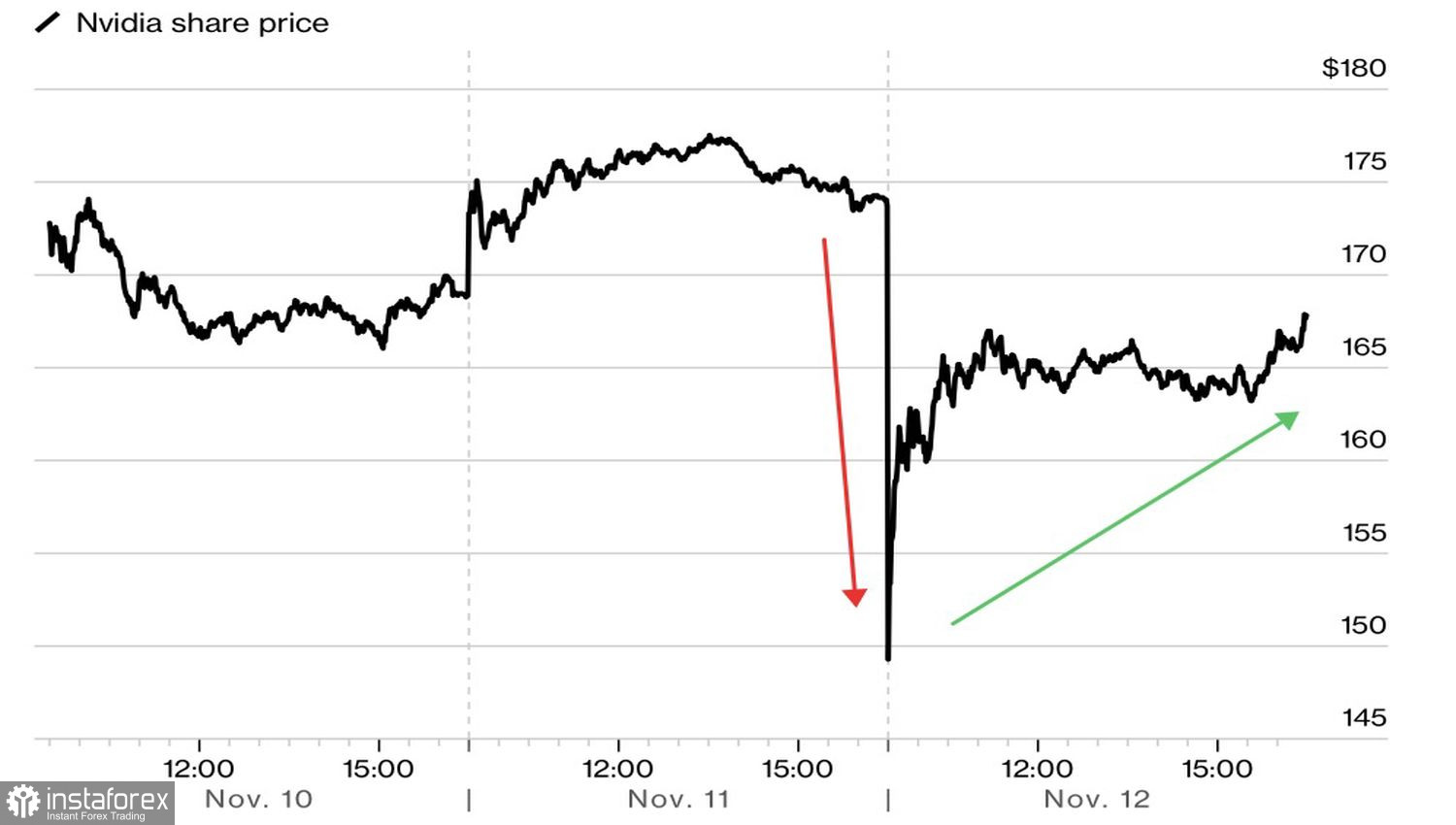
Jensen Huang spent more than 30 years building an empire. He used NVIDIA's proceeds to finance activity across the chip buyer ecosystem. That circular financing reminded investors of the dot-com era and supplier funding dynamics. Such analogies fed bubble talk centered on NVIDIA. A collapse in the company's shares could have triggered a domino effect, and a CEO departure naturally sparked panic.
However, the chip maker does not stop operating. Its products will be bought regardless of the name on the CEO's door. For investors, the financials matter, and competitors such as Broadcom and Intel are ready to plug the gaps that appeared in the AI ecosystem.
Panic was unwarranted, and the crowd was first to recognize it. In the first 30 minutes of trading, retail investors bought a net $111 million of NVIDIA stock, a record for that time window. That's roughly 40 times typical net retail flows in normal trading. Over the past week, about 61% of all net retail purchases were tied to the largest chipmaker's shares.
Top-three S&P 500 issuers' market cap dynamics
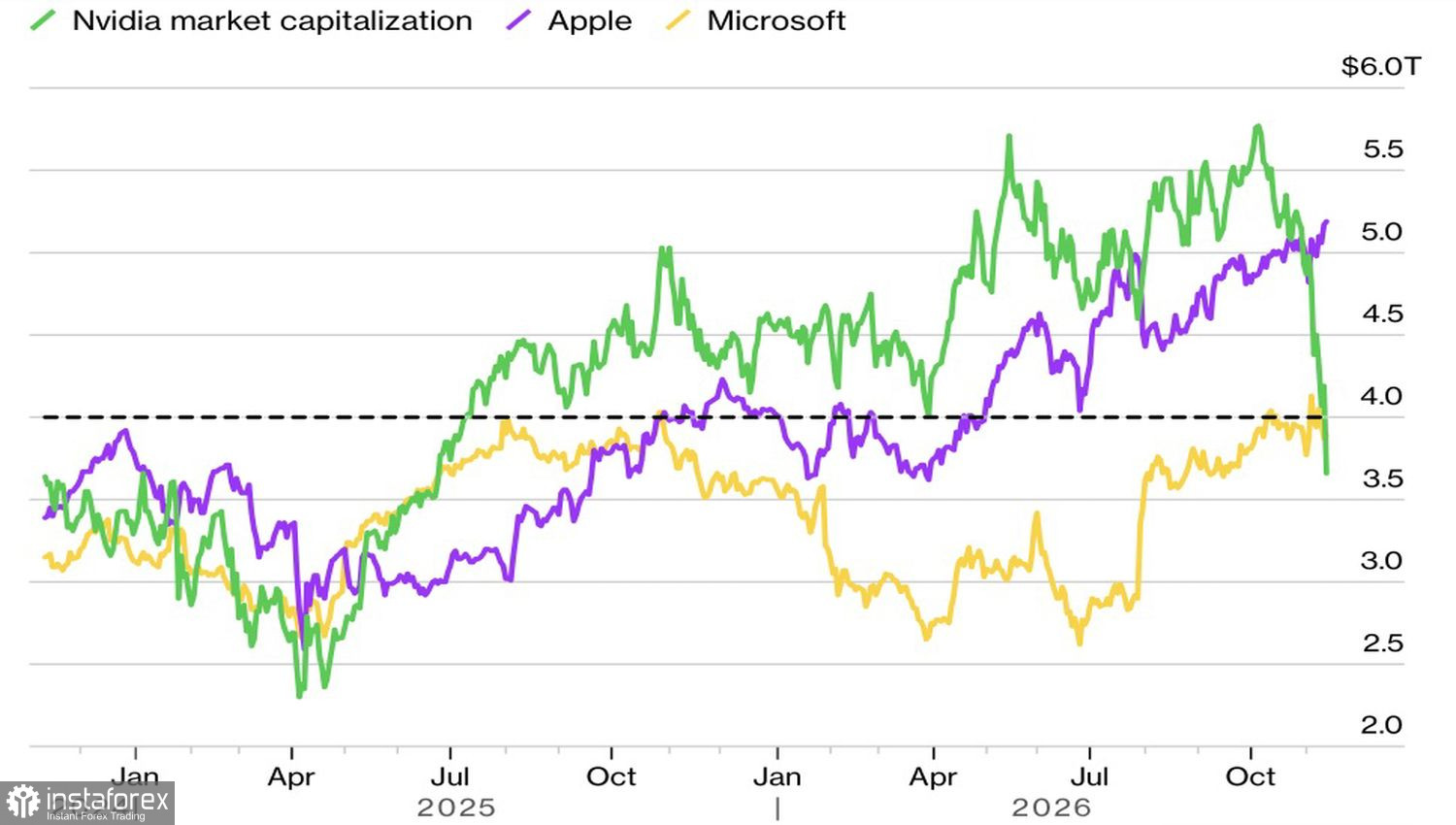
NVIDIA has fallen by roughly 35% from its October record highs, and its market cap dropped below $4 trillion, ceding the top spot to Apple and ranking behind Microsoft.
The S&P 500 opened with a gap down after US President Donald Trump said the US does not need a deal with Iran. Oil rose on renewed expectations of a protracted Middle East conflict, triggering a rally in Treasury yields — bad news for debt-financed hyperscalers and the AI industry at large.
Still, NVIDIA's example shows no company is irreplaceable. New technologies are firmly embedded in the US equity market. Investors treat crises as buying opportunities and are quick to buy the dip. That is likely the sensible play: if the S&P 500 survived tariffs and the energy shock, why not continue rallying if the AI story holds up?
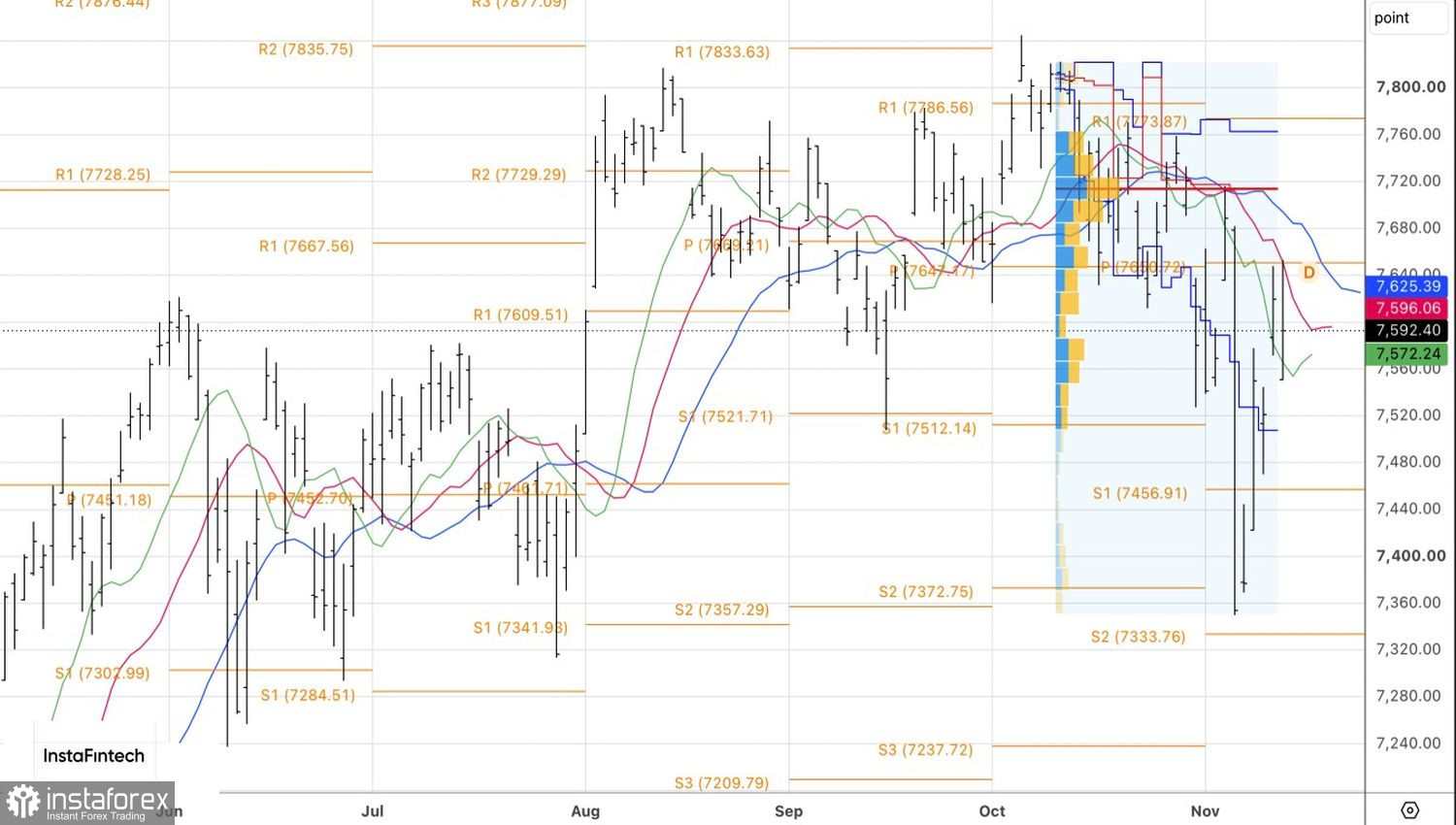
Technically, the daily chart shows that the S&P 500 has formed a bullish engulfing bar. A break above its high near the pivot level at 7,655 would justify adding to long positions.
You have already liked this post today
*El análisis de mercado publicado aquí tiene la finalidad de incrementar su conocimiento, más no darle instrucciones para realizar una operación.


